Skill Quotient Technologies

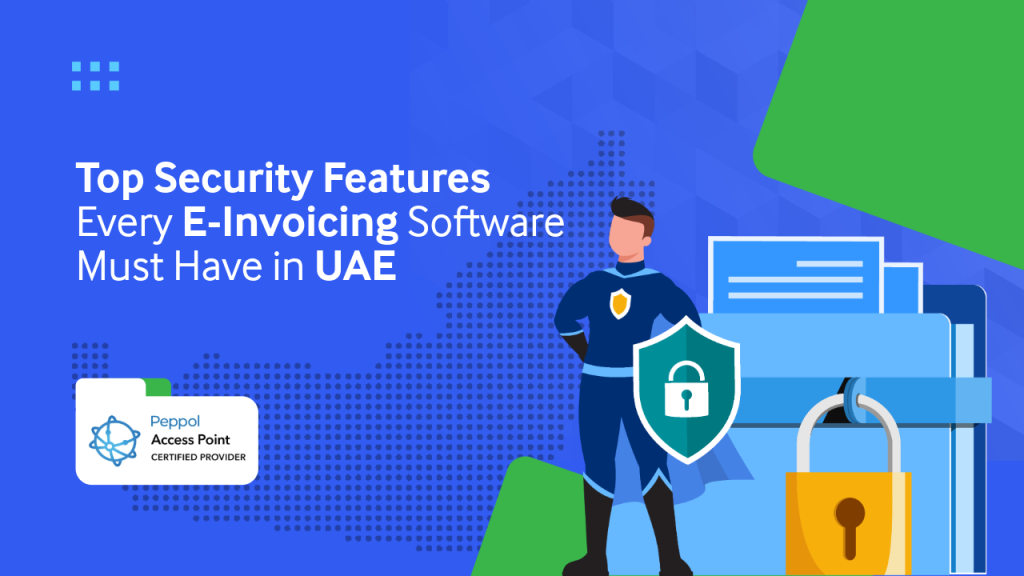
Top Security Features Every E-Invoicing Software Must Have in UAE

As businesses across the United Arab Emirates transition to digital invoicing systems, security has become a paramount concern. With the Federal Tax Authority (FTA) mandating UAE e-invoicing compliance, organizations are searching for the best e-invoicing software in UAE that not only meets regulatory requirements but also provides robust protection against cyber threats. Whether you’re evaluating an e-invoice software solution or partnering with e-invoicing solution providers, understanding the essential security features is critical to protecting your financial data and maintaining compliance.

Why Security Matters in E-Invoicing

The digital transformation of invoicing processes brings numerous benefits, including efficiency, cost reduction, and improved accuracy. However, it also introduces new vulnerabilities. Financial data breaches, invoice fraud, and unauthorized access can result in significant financial losses, regulatory penalties, and reputational damage. For businesses seeking an FTA-compliant E-invoicing Solution, security isn’t just a feature—it’s a fundamental requirement.
The e-invoicing software UAE market has grown rapidly, with numerous providers offering solutions that promise compliance and convenience. However, not all platforms are created equal when it comes to security. Let’s explore the critical security features that every top e-invoicing solution in UAE must incorporate.

Encryption is the foundation of secure digital communication. A reliable e-invoice system must employ end-to-end encryption to protect invoice data throughout its entire lifecycle—from creation and transmission to storage and archival.

What to look for:

  • AES-256 encryption for data at rest
  • TLS 1.3 or higher for data in transit
  • Encrypted backup systems
  • Secure key management protocols

When evaluating e-invoicing software providers, verify that their encryption standards meet international best practices and comply with UAE cybersecurity regulations. The leading e-invoicing software in UAE typically implements military-grade encryption to ensure that sensitive financial information remains confidential and tamper-proof.

Access control is crucial for preventing unauthorized entry into your invoicing system. Multi-factor authentication adds an essential layer of security by requiring users to verify their identity through multiple methods before accessing the platform.

Essential MFA features include:

  • SMS or email verification codes
  • Authenticator app integration
  • Biometric authentication options
  • Hardware token support for high-security environments

A PINT-AE compliant solution should make MFA mandatory for all users, particularly those with administrative privileges. This significantly reduces the risk of account compromise, even if login credentials are stolen.

3. FTA Compliance and PINT-AE Standards

Regulatory compliance isn’t just about following rules—it’s a security framework designed to protect businesses and consumers. The FTA-Accredited E-Invoicing Software in UAE must adhere to specific technical and security standards outlined by the Federal Tax Authority.

Key compliance features:

  • Integration with FTA’s e-invoicing platform
  • Support for Peppol e-Invoicing UAE solution standards
  • Automated compliance updates
  • Digital signature capabilities
  • Tax validation mechanisms
  • Audit trail maintenance

Choosing an E-Invoicing Partner that maintains current FTA Compliant E-invoicing Solution certification ensures your business remains protected from compliance-related vulnerabilities and penalties.

4. Digital Signatures and Authentication

Digital signatures provide irrefutable proof of document authenticity and integrity. The top e-invoicing software in UAE must support cryptographic digital signatures that comply with UAE’s electronic transaction laws.

Critical capabilities:

  • PKI (Public Key Infrastructure) support
  • Time-stamping services
  • Certificate validation
  • Non-repudiation mechanisms
  • Integration with UAE digital signature authorities

These features ensure that invoices cannot be altered after signing and that the sender’s identity is verifiable, preventing invoice fraud and disputes.

5. Role-Based Access Control (RBAC)

Not every employee needs access to all invoicing functions. A sophisticated e-invoicing solution in UAE implements granular role-based access control, allowing administrators to define precise permissions for different user groups.

RBAC best practices:

  • Segregation of duties between invoice creation, approval, and payment
  • Hierarchical access levels
  • Temporary access provisions for contractors or auditors
  • Automatic access revocation for terminated employees
  • Detailed access logs for compliance auditing

This feature is particularly important for larger organizations where multiple departments interact with the e-invoice system, ensuring that sensitive financial data is only accessible to authorized personnel.

6. Real-Time Threat Detection and Monitoring

Proactive security measures can identify and neutralize threats before they cause damage. The best e-invoicing software in UAE incorporates advanced monitoring systems that detect suspicious activities in real-time.

Essential monitoring features:

  • Intrusion detection systems (IDS)
  • Anomaly detection using AI and machine learning
  • Automated alert systems for unusual activities
  • IP address whitelisting and blacklisting
  • Failed login attempt tracking
  • Behavioral analysis to identify compromised accounts

Working with experienced e-invoicing solution providers who invest in cutting-edge security technology ensures your business benefits from the latest threat detection capabilities.

7. Comprehensive Audit Trails

Transparency and accountability are crucial for both security and compliance. A robust E-Invoicing Solution for UAE must maintain detailed, immutable audit trails that record every action taken within the system.

Audit trail requirements:

  • Timestamped records of all user activities
  • Invoice creation, modification, and deletion logs
  • Access attempt records (successful and failed)
  • System configuration changes
  • Data export and download activities
  • Tamper-proof log storage

These comprehensive records not only support security investigations but are also essential for demonstrating compliance during FTA audits. The top e-invoicing solution providers ensure their audit trails meet international standards for digital evidence.

8. Secure API Integration

Modern businesses rarely operate in isolation. Your e-invoice software must integrate securely with ERP systems, accounting software, payment gateways, and other business applications.

API security essentials:

  • OAuth 2.0 or similar authentication protocols
  • API key management and rotation
  • Rate limiting to prevent abuse
  • Input validation to prevent injection attacks
  • Secure webhook implementations
  • Regular API security audits

When selecting a Peppol e-Invoicing UAE solution, verify that its API security measures align with your organization’s overall cybersecurity strategy and that third-party integrations don’t introduce vulnerabilities.

9. Regular Security Updates and Patch Management

Cyber threats evolve constantly, and your e-invoicing software must evolve with them. Leading providers commit to regular security updates, vulnerability assessments, and timely patch deployment.

What to expect from your provider:

  • Scheduled security updates with minimal downtime
  • Transparent communication about vulnerabilities and fixes
  • Participation in responsible disclosure programs
  • Regular penetration testing by independent security firms
  • Compliance with emerging security standards

The leading e-invoicing software in UAE typically operates on a continuous improvement model, ensuring that security measures remain effective against new and emerging threats.

10. Data Residency and Privacy Compliance

Where your data is stored matters significantly, particularly in regulated environments. UAE businesses must consider data sovereignty requirements when selecting an e-invoicing solution provider.

Key considerations:

  • Data centers located within UAE or approved jurisdictions
  • Compliance with UAE Data Protection Law
  • GDPR alignment for international operations
  • Clear data ownership and retention policies
  • Secure data deletion procedures
  • Privacy impact assessments

A PINT-AE compliant solution should provide transparency about data storage locations and demonstrate adherence to local privacy regulations, giving you confidence that your financial data is handled appropriately.

11. Disaster Recovery and Business Continuity

Security isn’t just about preventing breaches—it’s also about ensuring your business can continue operating even when problems occur. Robust disaster recovery capabilities are essential for any top e-invoicing solution in UAE.

Critical continuity features:

  • Automated, encrypted backups
  • Geographically distributed data centers
  • Defined Recovery Point Objectives (RPO) and Recovery Time Objectives (RTO)
  • Regular disaster recovery testing
  • Failover mechanisms for high availability
  • Data restoration procedures

Your E-Invoicing Partner should provide clear service level agreements (SLAs) that guarantee system availability and data recovery capabilities, minimizing disruption to your invoicing operations.

12. User Training and Security Awareness

Technology alone cannot guarantee security—human factors play a crucial role. The best e-invoicing software in UAE providers recognize this and offer comprehensive training programs to help users understand security best practices.

Effective training programs include:

  • Initial onboarding security training
  • Regular security awareness updates
  • Phishing simulation exercises
  • Documentation on secure usage practices
  • Support for security policy implementation
  • Incident response training for key personnel

Partnering with e-invoicing software providers who invest in user education significantly reduces the risk of security incidents caused by human error, which remains one of the most common causes of data breaches.

Choosing the Right E-Invoicing Partner

Selecting the FTA-Accredited E-Invoicing Software in UAE requires careful evaluation of both technical capabilities and provider credentials. Consider these factors when making your decision:

Provider evaluation criteria:

  • Years of experience in UAE e-invoicing compliance
  • Customer testimonials and case studies
  • Security certifications (ISO 27001, SOC 2, etc.)
  • Transparency about security practices
  • Responsiveness to security inquiries
  • Financial stability and long-term viability
  • Local support and expertise

The transition to digital invoicing represents a significant investment, and choosing a provider with strong security fundamentals protects that investment while ensuring compliance and operational continuity.

Implementation Best Practices

Once you’ve selected your e-invoicing solution in UAE, proper implementation is crucial for maximizing security benefits:

  1. Conduct a security assessment before implementation to identify potential vulnerabilities in your current processes
  2. Develop clear security policies that define acceptable use, access protocols, and incident response procedures
  3. Implement phased rollout to identify and address security issues before full deployment
  4. Establish monitoring protocols to track system usage and detect anomalies
  5. Schedule regular security reviews to ensure ongoing compliance and effectiveness
  6. Maintain documentation of security configurations and procedures for audit purposes
  7. Create incident response plans that outline steps to take in case of security breaches

Future-Proofing Your E-Invoicing Security

The cybersecurity landscape continues to evolve, and forward-thinking organizations must anticipate future challenges. When evaluating the top e-invoicing solution, consider its roadmap for incorporating emerging security technologies:

Emerging security trends:

  • Blockchain integration for enhanced invoice authenticity
  • AI-powered fraud detection systems
  • Quantum-resistant encryption methods
  • Zero-trust security architectures
  • Advanced identity verification using biometrics
  • Enhanced privacy-preserving technologies

Providers who demonstrate commitment to innovation and continuous improvement are better positioned to protect your business against tomorrow’s threats.

Conclusion

Security in e-invoicing is not a luxury—it’s a necessity. As UAE businesses embrace digital transformation and comply with FTA regulations, selecting the best e-invoicing software in UAE with comprehensive security features becomes critical for protecting sensitive financial data, maintaining regulatory compliance, and preserving business reputation.

The ideal E-Invoicing Solution for UAE combines robust encryption, multi-factor authentication, regulatory compliance, continuous monitoring, and disaster recovery capabilities. By partnering with reputable e-invoicing solution providers who prioritize security and offer PINT-AE compliant solutions, businesses can confidently navigate the digital invoicing landscape while minimizing risks.

Whether you’re implementing your first e-invoice system or upgrading from an existing solution, prioritize these essential security features. The investment in secure, FTA-Accredited E-Invoicing Software in UAE pays dividends through enhanced data protection, streamlined compliance, and peace of mind that your financial operations are safeguarded against evolving cyber threats.

Choose wisely, implement carefully, and work with an E-Invoicing Partner who understands that security isn’t just a feature—it’s the foundation upon which successful digital transformation is built.

FAQ

Most frequent questions and answers

PEPPOL (Pan-European Public Procurement Online) is a global standard for electronic document exchange that enables businesses to send invoices, credit notes, and other documents securely across borders. For UAE businesses, it matters because the government has adopted the PEPPOL Continuous Transaction Control (CTC) model for mandatory e-invoicing implementation in July 2026. This means businesses must comply with both PEPPOL standards and Federal Tax Authority requirements to continue operations legally.

The UAE will implement mandatory e-invoicing in July 2026. All businesses operating in the UAE must be compliant by this deadline, which means they must have a PEPPOL-accredited e-invoicing solution in place that meets the Federal Tax Authority’s requirements.

SMARTeIS stands out by offering a single platform that handles both FTA compliance and PEPPOL submission, eliminating the need for multiple systems. It leverages AI-powered automation for invoice validation, integrates seamlessly with major ERP systems, and is officially listed by the UAE Ministry of Finance as a Pre-Approved Accredited E-Invoicing Service Provider. Additionally, it supports multilingual and multicurrency operations, and offers flexible deployment options.

SMARTeIS follows an 8-week implementation roadmap: Weeks 1-2 focus on assessment and planning, Weeks 3-4 cover setup and data migration, Weeks 5-6 include testing and training, and Weeks 7-8 handle go-live and hyper-care support. This structured approach ensures businesses achieve compliance without disrupting operations.

Yes, SMARTeIS integrates effortlessly with major ERP systems, including SAP, Oracle, Microsoft Dynamics, Odoo, QuickBooks, and Zoho. It also supports custom accounting systems through flexible integration methods, including APIs, SFTP, or manual uploads, making it compatible with virtually any business infrastructure.

SMARTeIS uses an AI-driven pre-validation engine that detects errors in VAT calculations, tax codes, and mandatory fields before submission. Only compliant invoices reach the PEPPOL network and FTA systems. When errors are detected, the platform provides clear, actionable guidance on corrections needed, with automatic rejection and resubmission workflows.

Yes, SMARTeIS is ISO 27001 certified, ensuring enterprise-grade data security. The platform maintains comprehensive audit trails, secure document archival for regulatory periods, encrypted data transmission, and role-based access controls—meeting the stringent requirements of both PEPPOL and FTA regulations.

Absolutely. SMARTeIS supports multi-lingual invoices (including Arabic), multiple currencies, and various tax jurisdictions within a single platform. By connecting to SMARTeIS, businesses gain access to the entire PEPPOL network spanning over 40 countries, making cross-border transactions as simple as domestic ones.

SMARTeIS offers flexible deployment options to suit different business needs and infrastructure requirements. It can be deployed as Platform-as-a-Service (PaaS) or Software-as-a-Service (SaaS), with options for cloud deployment or on-premises hosting, making it suitable for businesses of all sizes from SMEs to large enterprises.

Beyond compliance, SMARTeIS provides GenAI dashboards for predictive analytics, an AI chatbot for real-time queries and support, dynamic eReporting and tax analytics modules, customizable invoice templates and workflows, and multi-tenant architecture for centralized governance across entities. These features make it a comprehensive financial operations platform rather than just basic e-invoicing software.

Request Your Demo
Your Demo